Curious George
Single-handedly designed and developed a 14-book interactive series from a beloved 80-year-old brand for the iPad generation, transforming how families experience reading together.
The series ranked #3 on iTunes at launch, earned multiple Apple Editor's Choice awards, and validated the business investment for HMH's broader expansion in the Curious George digital franchise.
Overview
Designer and Developer
2012 - 2014
14 interactive books
Dedicated Apple store design
50+ animations
100+ educational mini-games
Custom UI asset library
Brand-compliant design system
Project Manager, Heritage Design Specialists, Editorial Team

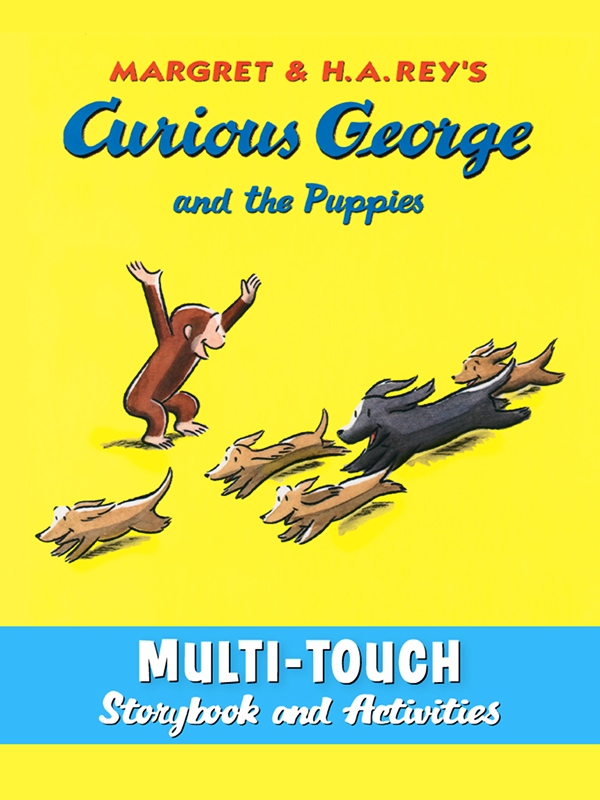
When I started, Curious George existed only as static print books and basic ebooks, while the children's ebook market was exploding (revenue doubled from $105M to $233M between 2011-2012). HMH had no infrastructure for building immersive digital experiences.
By the time I finished, I had established a precedent for this kind of work and proven the series a financial and familial success.
Parents wanted to read with their children but couldn't compete with screens.
Kids ages 0-8 spent 4x more time on screens than with books. Parents weren't reading less because they didn't value it, but because traditional formats couldn't compete with the engagement of interactive content.
40% of parents reported they "can't find time" to read aloud with children
61% of children preferred using devices with someone else rather than alone
Children showed 20-27% vocabulary gains after just two weeks with well-designed educational apps
The children's ebook market was exploding, signaling how families were ready for a better reading experience.
Revenue doubled from $105M to $233M between 2011-2012, with 70% of kids in tablet-owning households already using a device.
Apple had just launched iBooks Author and were actively promoting publishers who used it. As families were already spending time on tablets and technology was competing for attention, Curious George could fill the gap: transforming screen time into an immersive option that could bring parents and children back to reading together.
Visual Walk-Through

how it all came together
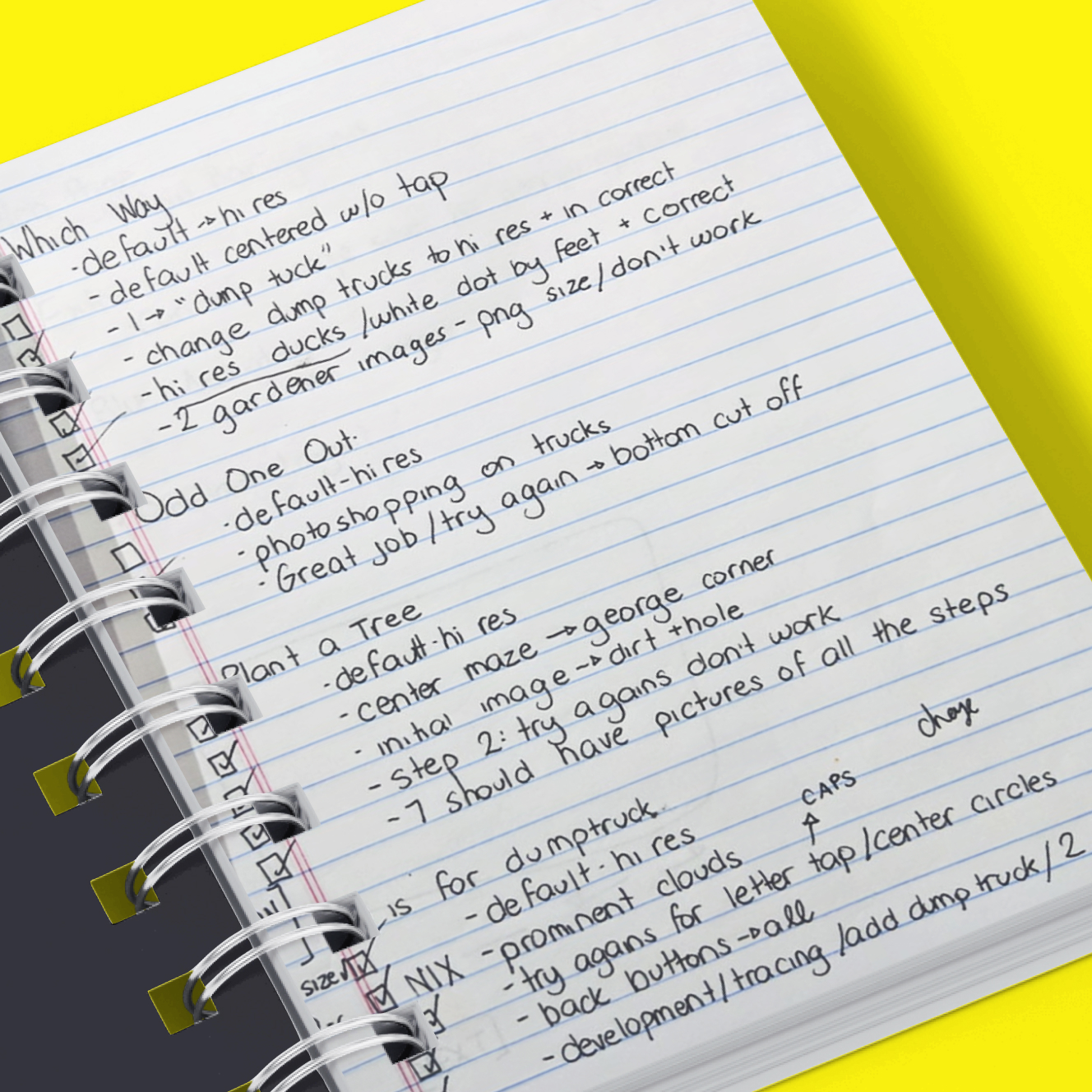
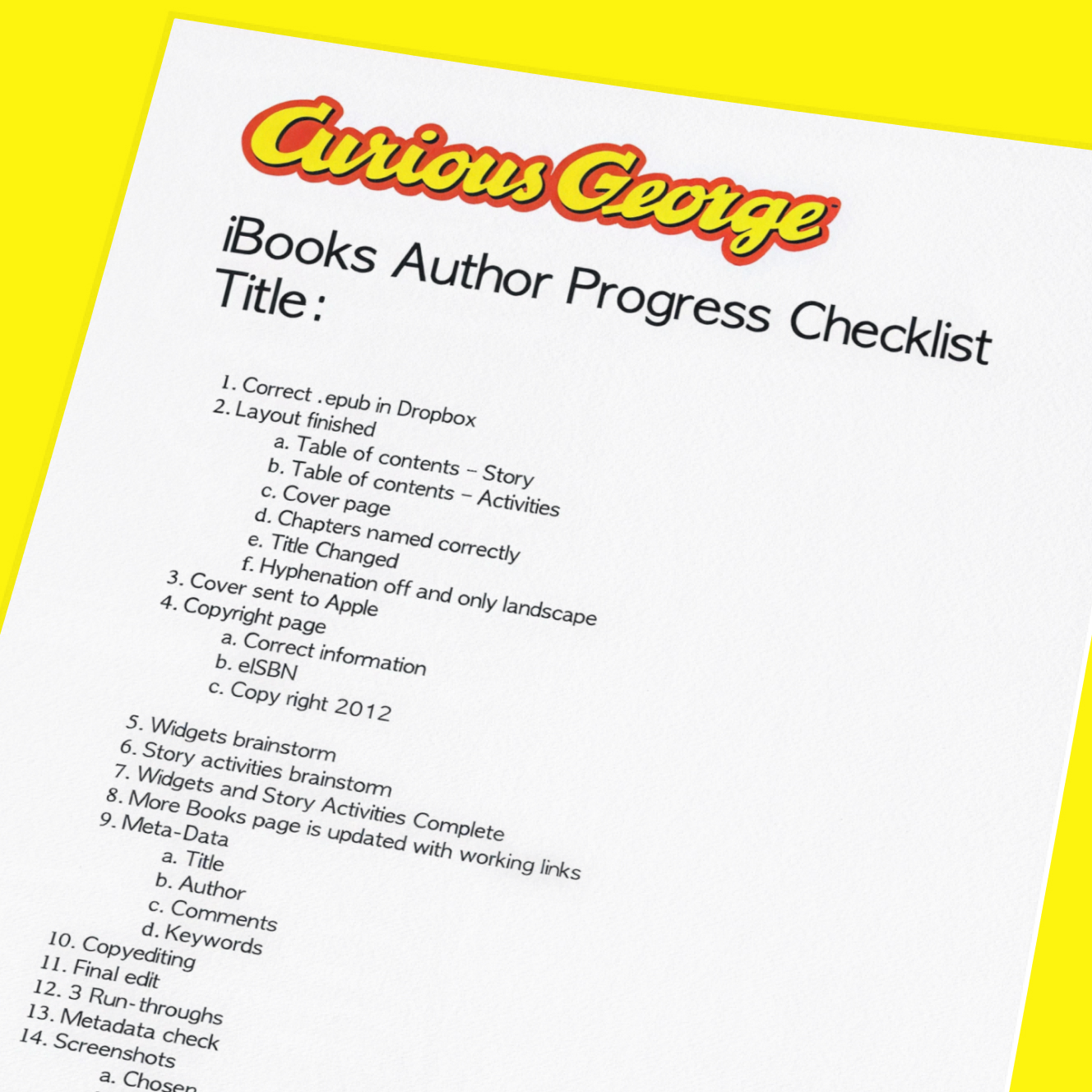
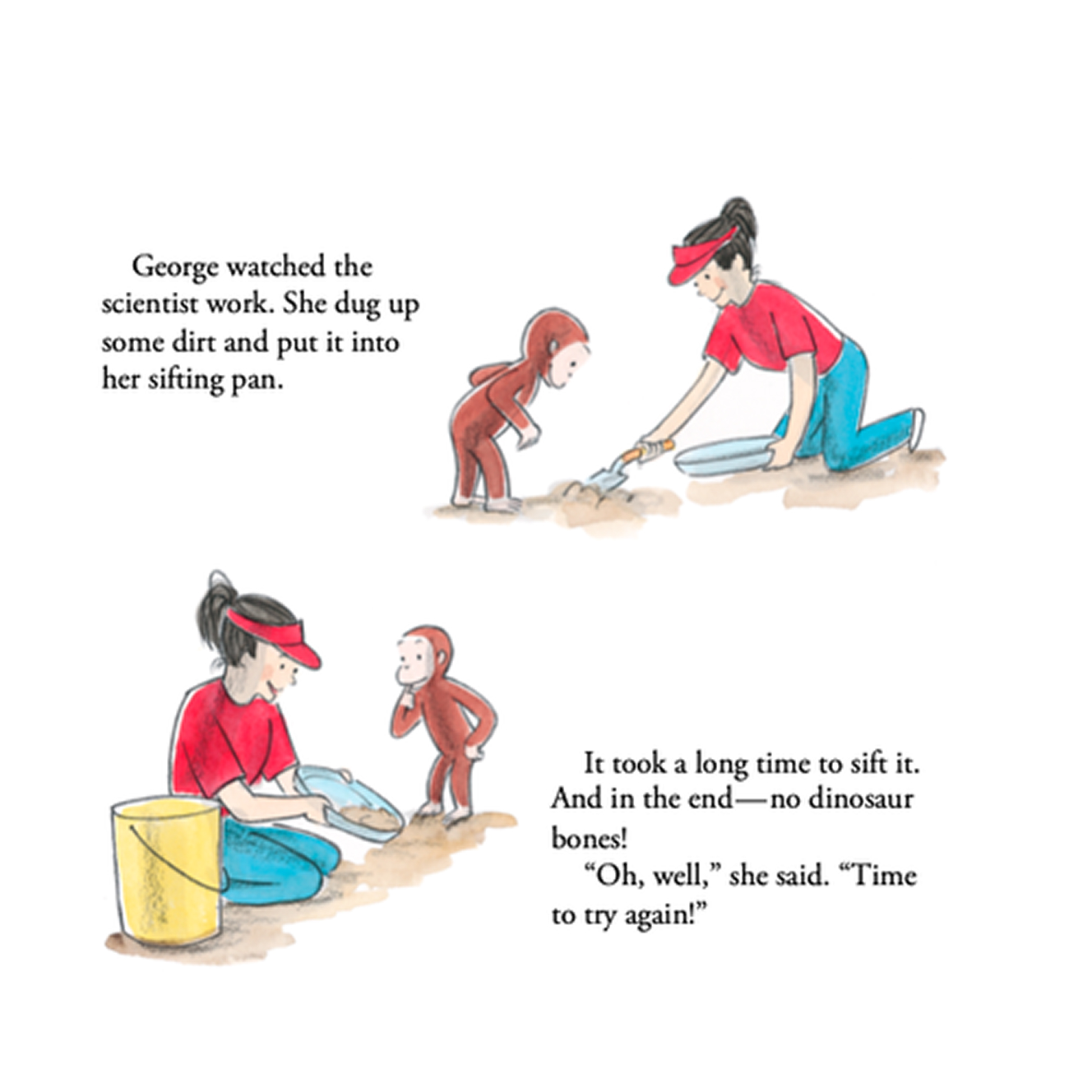
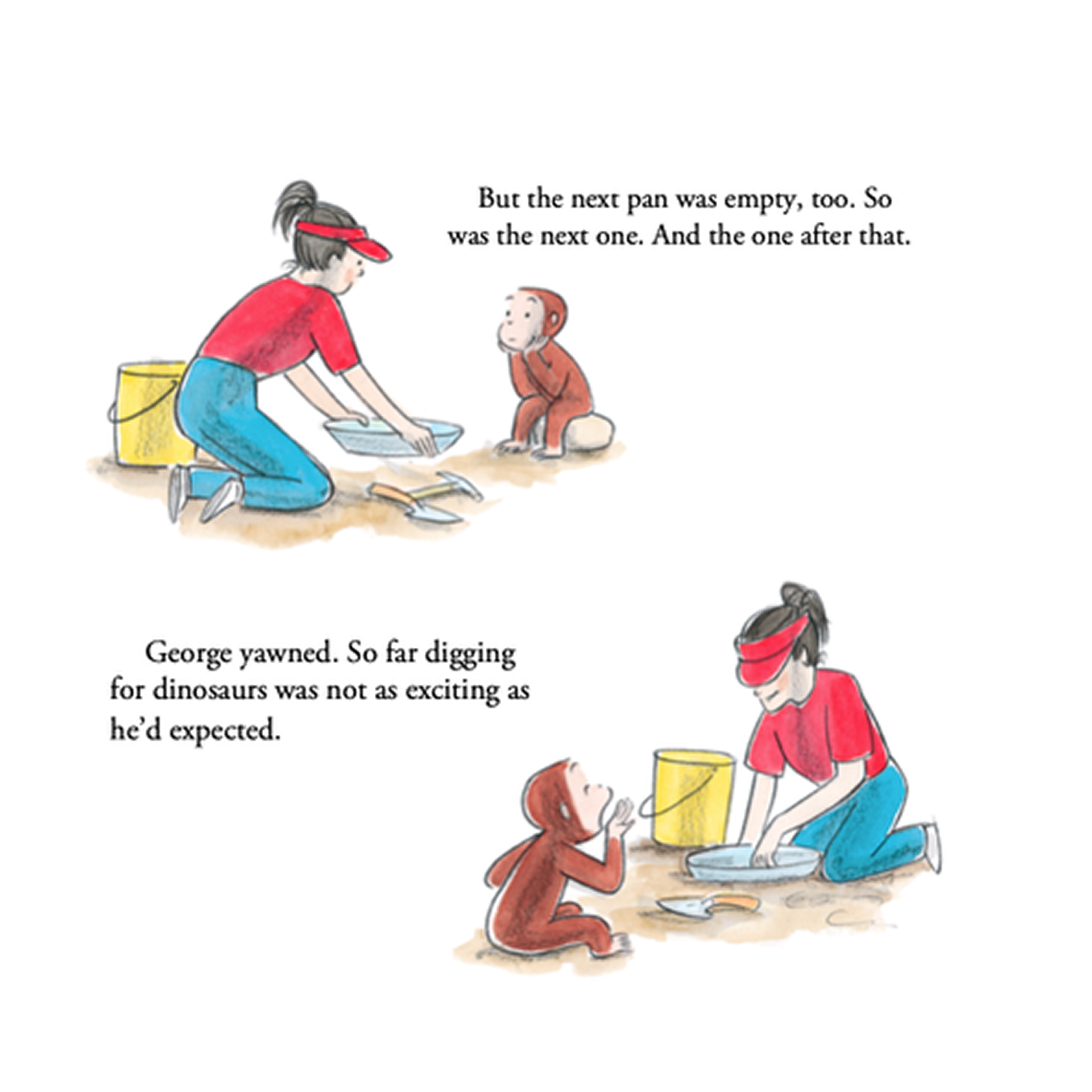
The journey from print book to interactive experience followed a systematic process: selecting titles based on sales data and thematic potential, annotating every page for opportunities (layout modifications, animation candidates, interaction moments, activity ideas), then designing and developing each component through specialized workflows for layouts, animations, educational interactions, and activity widgets.

Design Process
I designed and developed a complete 14-book interactive series from scratch: the end-to-end production process, a component system that enabled solo execution at scale, and a brand-compliant UI library since Curious George had no existing digital assets.
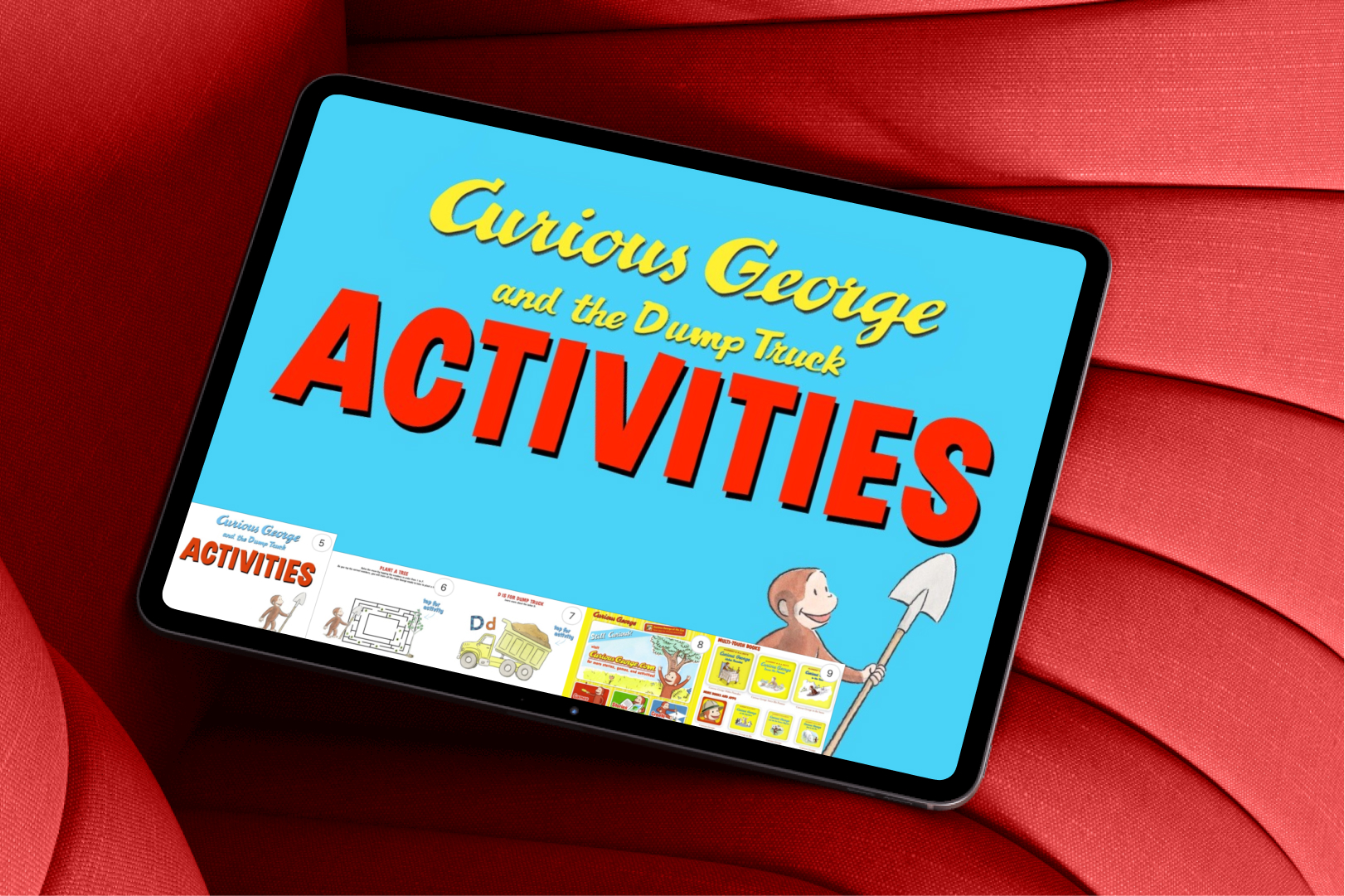
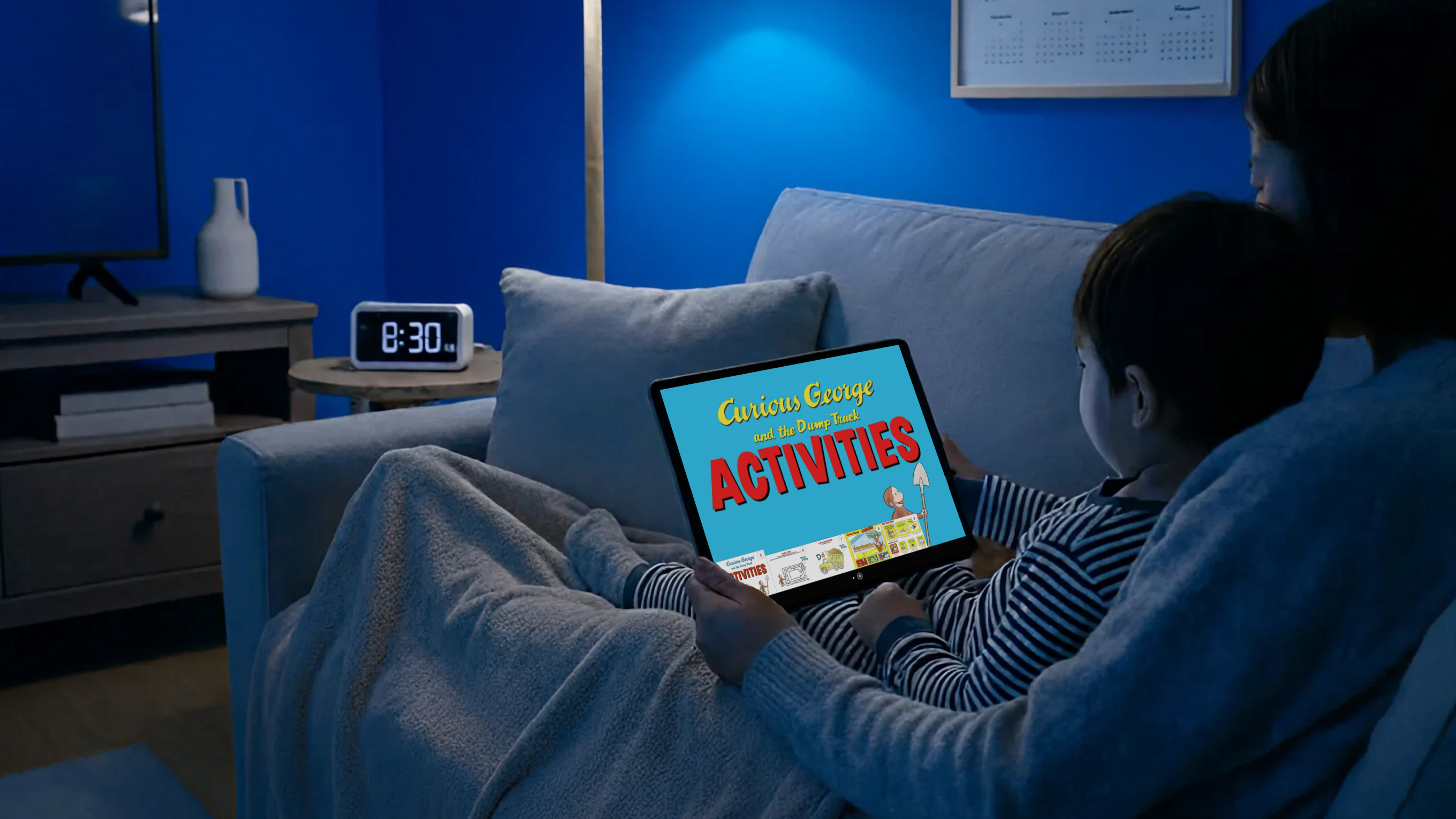
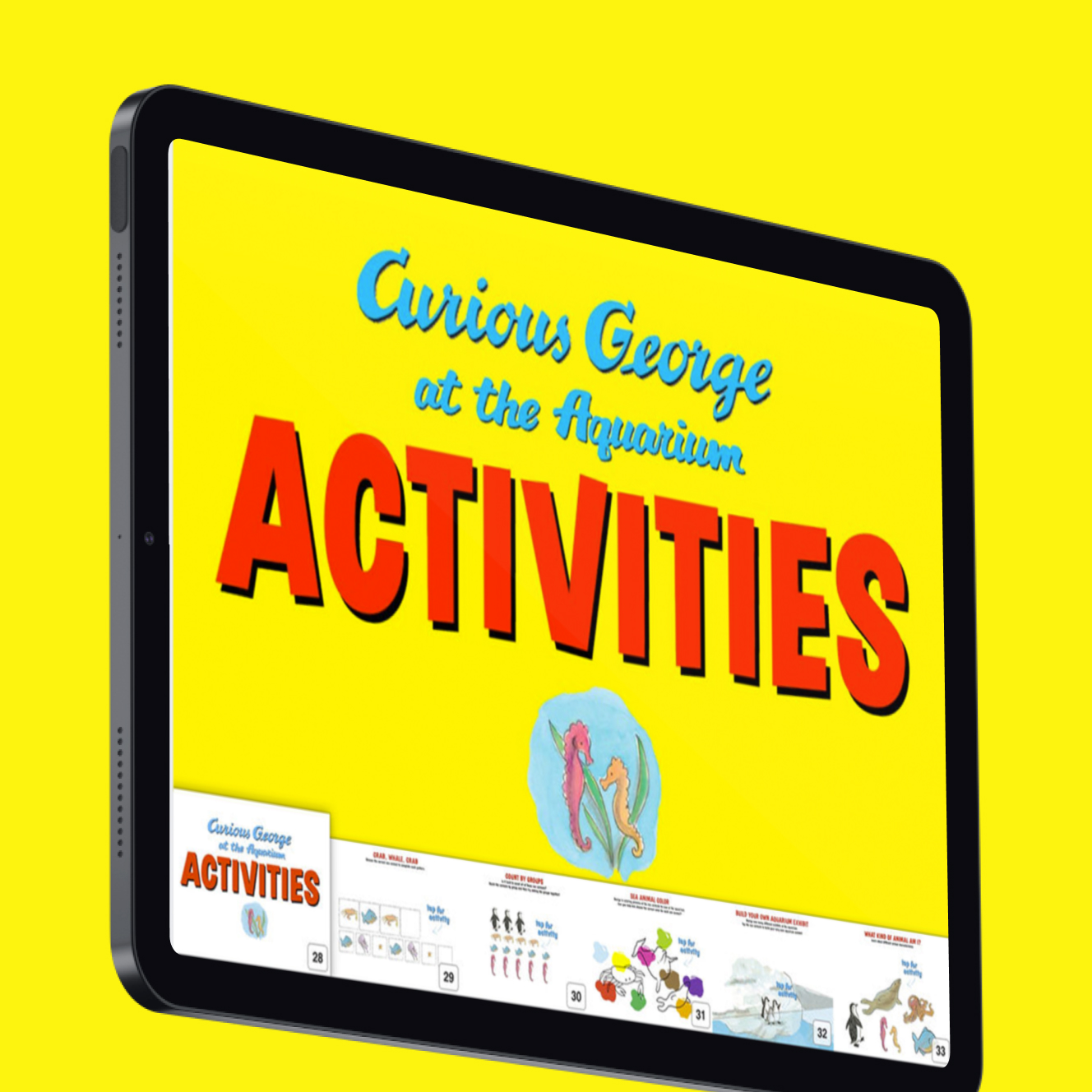
Each book contained two sections: an enhanced reading experience with animations and mid-story interactions, and a post-read themed activities section with educational mini-games.
I owned the full scope: layout adaptation, animation creation, widget development, audio editing, and custom JavaScript for interactions like letter tracing and digital painting, reimagining static print and ebooks as immersive digital experiences for families.
Interactive
Books
14 interactive books reformatted from square print to iPad spec, each with an enhanced reading section featuring animations and mid-story interactions.
Educational
Widgets
100+ custom developed widgets grounded in learning theory principles for early childhood. Widgets included letter tracing, digital painting, matching games, and counting activities.
Process and Components
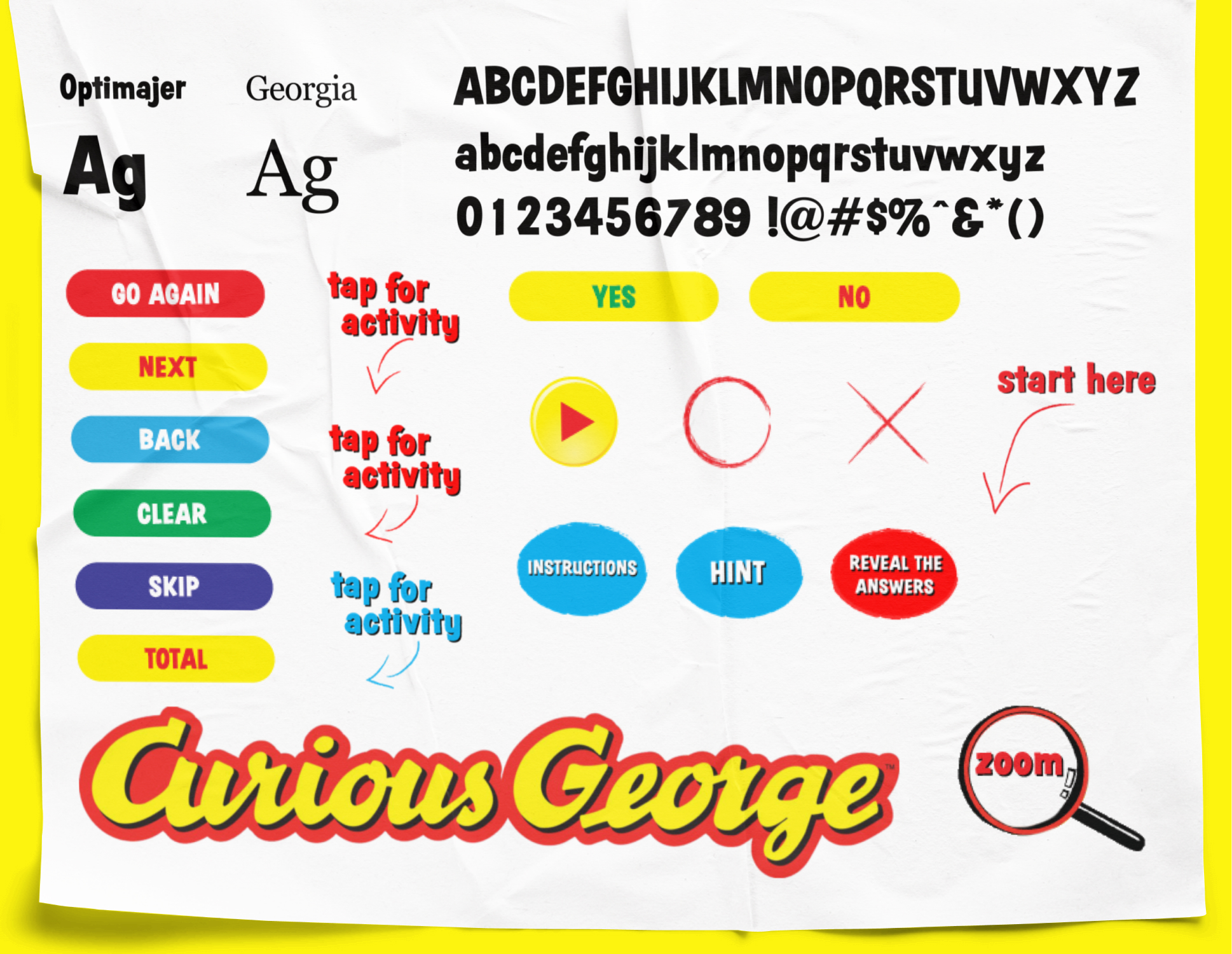
A scalable process, layout, and architecture, along with a brand-compliant UI library (buttons, icons, navigation, instructional elements) that enabled solo execution across all 14 titles.
framing and metrics of success
Children sought reading experiences that were intrinsically rewarding, like stories that captured their attention, stimulated imagination, and generated enough positive emotion to naturally want to re-engage with the content again and again.
Parents were motivated by screen-based activities that supported healthy cognitive and linguistic development. They wanted digital experiences that felt pro-social/familial and educational, enhancing shared time rather than displacing it.
Families as a unit were looking for a mediated reading environment designed to support dual modes of engagement: adult-guided narration and autonomous child exploration. They valued formats that adapt to varying levels of support, enabling co-reading, curiosity, and independent discovery in a single experience.

Generate meaningful revenue by capturing share in a children’s ebook market, which grew from 6% → 23% of all consumer book sales.
Position HMH as an innovative interactive digital publisher, leveraging Apple for iBooks Author promotional placement
Validate the long-term digital potential of the Curious George franchise by transforming its 80+ year legacy and 100+ book catalog into an interactive product aligned with developmental science.

Rigid brand restrictions
Strict adherence to the Curious George identity was required, including the rule that George could never be shown using technology. All custom typography had to be delivered as image assets with alt text to ensure accessibility.
Extreme platform and asset limitations
iBooks Author was <1 year old with no custom HTML support, black-listed video formats, and only a small system typeface set. In additional, the original square-format art required full re-layout for widescreen, and backgrounds couldn’t be separated from foreground elements without significant reconstruction for animations.
Single-designer/developer, end-to-end execution
The entire project was delivered by one designer (me!) responsible for planning, research, schedules, reviews, shareouts, UX and visual design, asset production, animation, development, QA, and final editing.


discovery, research & insights
methods used
• Publishing sales data analysis to prioritize book selection from George's 100+ title catalogStakeholder interviews with teachers, parents, and psychologists about reading behavior
• Learning theory research with HMH's in-house learning design specialists
• Competitive analysis of emerging interactive children's content
• Platform research into iBooks Author capabilities, Tumult Hype for widget development, and Audacity for audio editing
key insights
Parents wanted to participate, not just supervise. Research showed 61% of children preferred using devices with someone else rather than alone, and 97% said they liked when a parent or friend helped them.
This validated a two-section approach: reading together and activities that could be done independently.
I learned that bite-sized was better for young learners. Miller's Information Processing Theory established that working memory holds 7±2 chunks of information, with young children having even more limited capacity. The NAEYC & Fred Rogers Center Joint Position Statement (2012) emphasized that effective early childhood technology should be "active, hands-on, engaging, and empowering; give the child control."
I discovered that touch is intuitive even for very young children. The Michael Cohen Group study (2011) found children as young as 2 years old can successfully use touch screens through "natural trial, error, and repeat strategies." 64% of children ages 4-7 found touch devices "easy" or "very easy" to use.
design implications
Three things shaped the approach:
1. Design the series for shared use; reading sections for together time, activities for independent exploration
2. Keep all interactions short and self-contained with limited to no multi-step sequences
3. Maximize tappable elements and immediate feedback so every interaction is discoverable through natural exploration
thinking in systems & scale
scaling book creation and the creative process
Rather than designing each book from scratch, I developed a systematic approach with four distinct component types, each with its own workflow:
• For dynamic layouts: I'd adapt square pages to iPad format by extracting them from an epub → editing in Photoshop → consolidating via slideshow tool
• For short animations: I'd bring illustrations to life by dissecting the illustration → animating in Flash → exporting to m4v → layering audio
• For educational interactions: I'd create mid-story learning moments by storyboarding → designing in Illustrator and photoshop → building in Hype → adding audio → exporting as a widget
• For activity widgets: I'd build themed mini-games by applying learning theory → designing → developing custom code → building in Hype
UI asset library
George had no existing digital UI assets, so I created a comprehensive library from scratch:
• Navigation buttons (Go Again, Next, Back, Clear, Skip)
• Feedback elements (Yes/No indicators, Hint, Reveal Answer)
• Instructional components (Start Here, Instructions, Zoom)
• Activity controls (Total counter, progress indicators)
All assets were designed to feel native to the Curious George visual language while meeting accessibility requirements.
widget-based architecture
By using Tumult Hype to export iBooks Author-compatible widgets, I created an external system where new interaction patterns could be developed once and reused across books. Custom JavaScript enabled advanced features like canvas drawing for letter tracing and digital painting.
audio as a feedback layer
Every interaction included carefully selected audio feedback to reinforce learning without requiring reading ability. This critical for the pre-literate target audience.
why it mattered
This systems approach enabled me, a single designer/developer to produce 14 complete books over 19 months (an average of one book every 5-6 weeks) while maintaining consistent quality. Without these systems, the project would have required a much larger team or significantly longer timeline.
visual strategy
respecting the source material
The Curious George illustrations are beloved for good reason. My visual strategy prioritized honoring the original artwork while enhancing it for interactivity:
• Maintained the warm, hand-drawn aesthetic in all new UI elements
• Used color palettes derived from the existing illustration style
• Ensured animations felt like natural extensions of the static images
format transformation
Converting square-format print books to the 1024×768 iPad spec required thoughtful layout decisions:
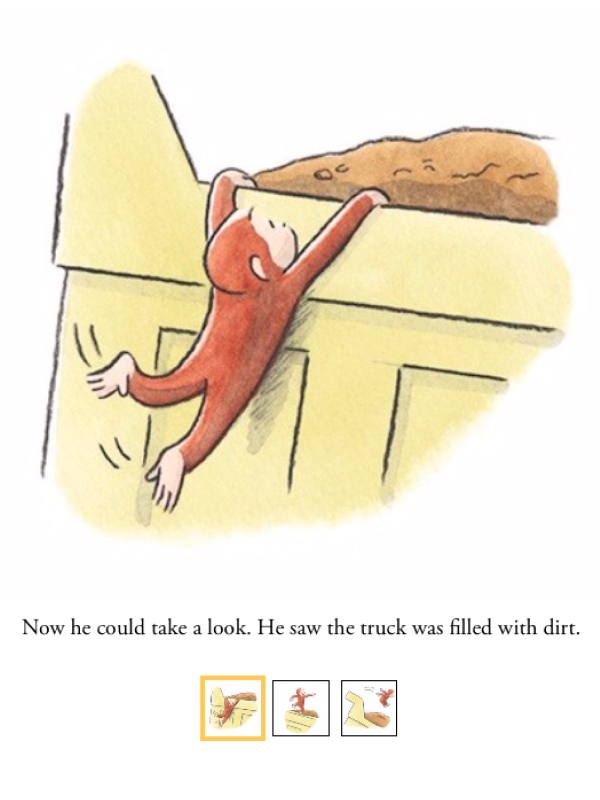
• Consolidated sequential similar pages using slideshow tools to improve reading flow
• Recomposed spreads to work as single screens while maintaining narrative coherence
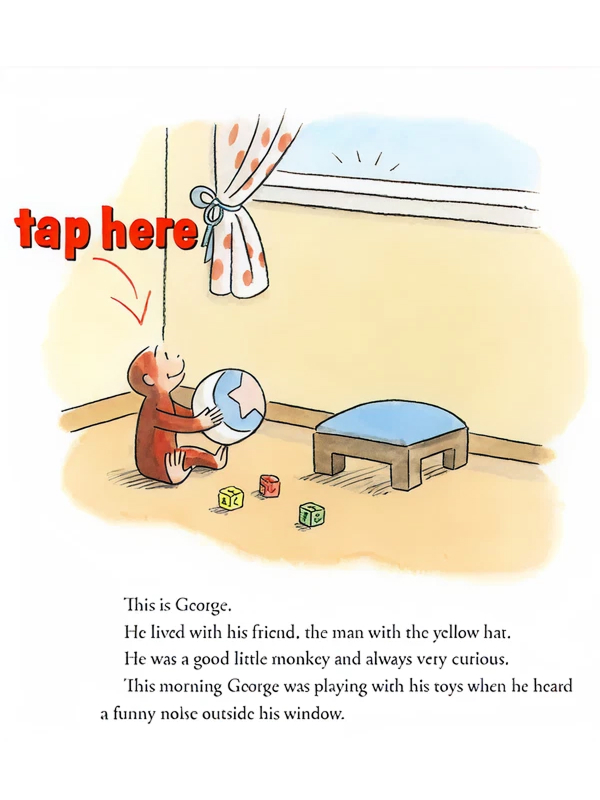
• Added interactive layouts where the content supported them (e.g., tappable elements revealing additional detail)
typography constraints
iBooks Author had limited typeface support, but the brand required the custom Curious George headline font and OptiMajer. My solution? all custom typography was imported as images with comprehensive alternate text for accessibility, maintaining brand consistency while meeting platform limitations.
sample interaction patterns
• Tap-to-Discover: Tap on highlighted elements to trigger animations, sounds, or reveal additional content. Aligned with research showing young children learn through "natural trial, error, and repeat strategies."
• Trace and Draw: Custom JavaScript enabled letter tracing and digital painting within the lines. These activities support fine motor development and letter recognition.
• Match and Sort: Game mechanics designed around cognitive development stages. Simple matching for younger children, sorting and categorization for slightly older users.
why it mattered
The visual strategy needed to serve multiple masters: brand guardians who protected George's legacy, parents who expected educational value, children who demanded engagement, and Apple's standards for featured content. The systematic approach ensured consistency across 14 books while the attention to interaction design ensured genuine learning value. created workspaces, the workspace visibility dropdown didn't just list options, it explained what each one did right there.
validation, testing, and tracking
testing approach
Each book went through a structured review process:Initial concept review:
• Annotated book with proposed interactions reviewed with Project Manager
• UX flows and storyboards reviewed before development
• Copy editing and brand compliance check before submission
Given iBooks Author's newness and frequent bugs, extensive device testing was critical:
• Testing across iPad generations for hardware compatibility
• Validating widget functionality after each iBA software update
• Audio format verification (iBA deprecated certain formats over time)
observational feedback
While formal user testing wasn't within scope, I gathered informal feedback by observing how children in my network interacted with the books, identifying confusing interactions or missed tap targets for iteration.
metrics definition
• App Store ranking: target was Top 10 in category
• Apple recognition: target was any featured placement
• User ratings: target was 4+ star average
• Series momentum: continued book releases, targeting completing 10 planned titles
rollout strategy
Rather than launching all books simultaneously, we released strategically. "Curious George Says Thank You" was the first title. Its back cover translated "thank you" in multiple languages, showcasing the diversity and learning focus. Seasonal titles timed to holidays and events (snow themes in winter, beach in summer).
trade-offs
What I Prioritized
simplicity and value
Every animation and interaction was designed to support comprehension or skill development. This sometimes meant choosing simpler interactions that better served learning goals.
shipping over perfection
With 14 books to deliver as a solo designer/developer, I made pragmatic choices about scope. Some interaction ideas were deprioritized to maintain the release cadence.
What I Said No To
video content
While video would have been engaging, iBA's video format restrictions and file size implications made it impractical. Animations built from stills were more reliable and performant.
platform expansion
Requests to adapt content for Android or other tablet platforms were deprioritized to focus on the iBooks ecosystem.
advanced features
Features like saving drawings or sharing creations were out of scope given the technical constraints and timeline.
key design decisions
I split each book into two sections: reading together and playing independently
What I DID
Designed each book with two distinct sections: an interactive reading section (the story with enhancements) and a themed activities section (educational mini-games). Clear navigation separated the two experiences.
Why it mattered
This architecture served the core insight that families wanted both together-time and independent-play options. Parents could read the story with their child, then the child could explore activities independently, extending engagement while giving parents a break.
I created 50+ animations by extracting and reconstructing flat illustrations
what I DID
Rather than requesting new animated assets (time and budget prohibitive), I developed a technique to extract characters and objects from flat illustrations, recreate missing backgrounds in Photoshop, and animate the components. If ducklings waddled across the street in the story, I extracted each duckling, recreated the background without them, then animated the movement.
why it mattered
This approach enabled 50+ animations without requiring new illustration work. It maintained perfect visual consistency with the source material, and the technique became repeatable across all 14 books.
I developed custom JavaScript widgets when iBooks Author couldn't support my designs
whAT I DID
When iBooks Author's built-in widgets couldn't support the interactions I designed (letter tracing, digital painting within the lines), I developed custom JavaScript solutions embedded in Tumult Hype widgets. This enabled HTML canvas functionality within the iBA format.
why it mattered
The custom code unlocked interaction patterns that no other children's iBooks were offering at the time. Letter tracing and digital painting directly supported learning objectives (fine motor skills, letter recognition) that generic tap-and-reveal interactions couldn't address.
Results and Thoughts
When I started, Curious George existed only as static print books and basic ebooks in a market where children were spending 4x more time on screens than reading.
Within a year and a half, I shipped 14 interactive books that exceeded every target, proving families would read together when the experience is designed for engagement.
did we hit those metrics of success?
Top 3
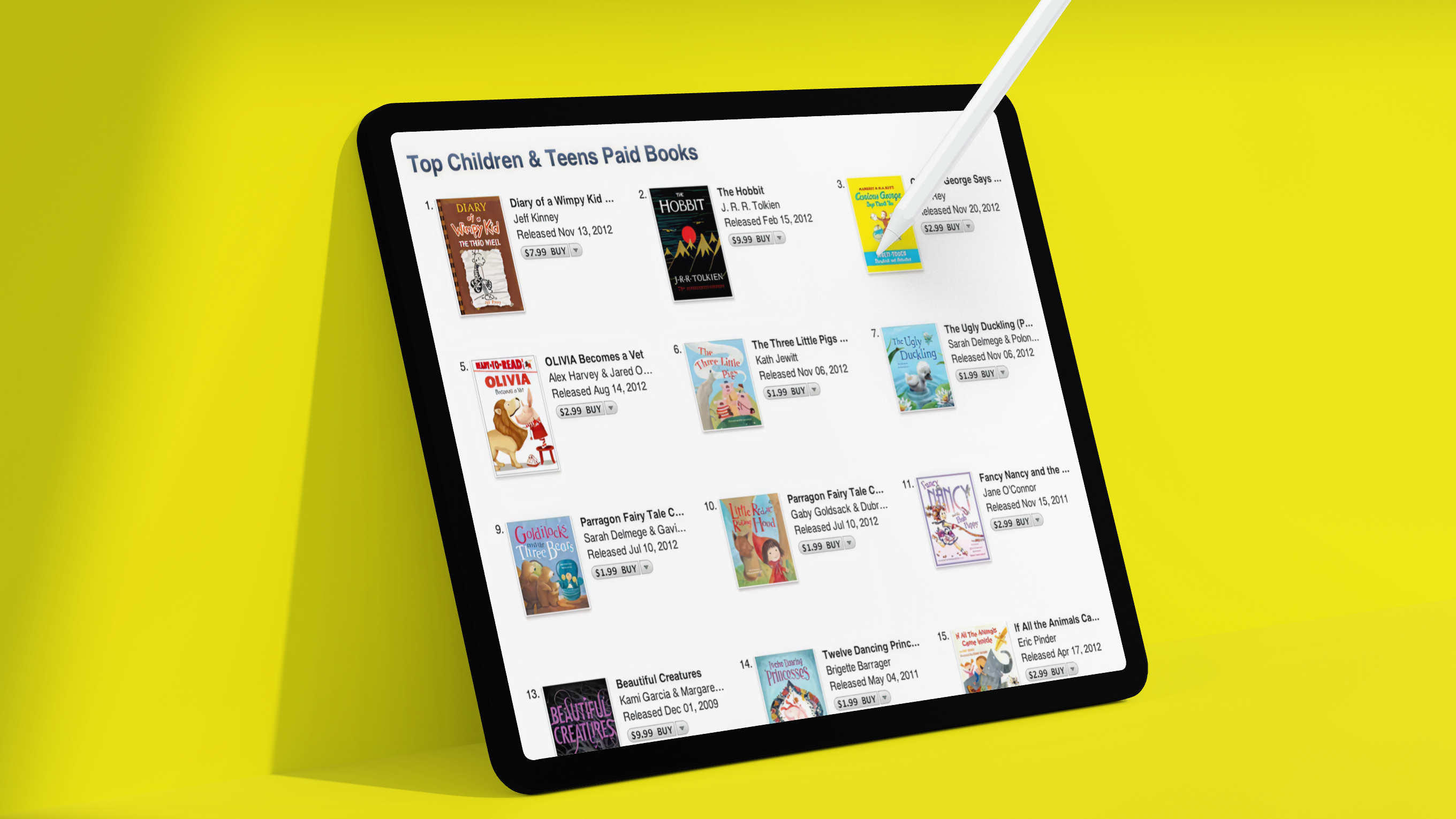
Hit #3 on iTunes within hours of first launch, behind only Diary of a Wimpy Kid and The Hobbit.
3+
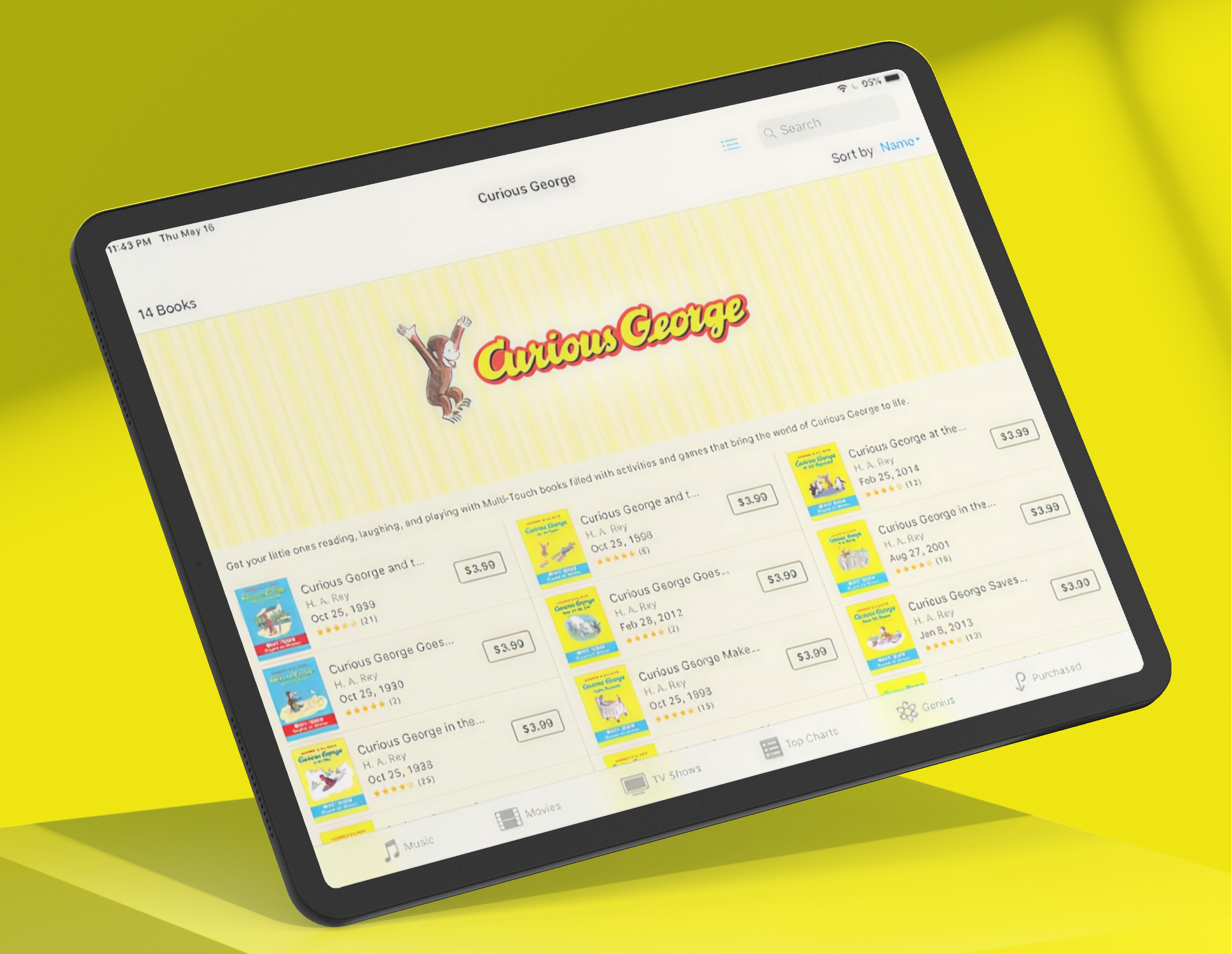
Earned multiple Apple Editor's Choice awards plus a entire dedicated Curious George Multi-Touch room in the iBook Store.
14
Shipped all 10 planned books, plus 4 over our initial goal!
news story
"Houghton Mifflin Harcourt unveils Curious George books specially formatted for the iPad"
—
"The interactive multi-touch format features embedded tools that allow children to enjoy an immersive reading experience by playing an active role in George's adventures... We wanted to create a digital storybook that didn't distract children from the narrative, but instead allowed them to help the story along by completing activities that are closely tied to the plot."
reflections

designing, especially for children, carries real responsibility and impact
This work shaped how kids learned and how families spent time together. That's a privilege, but it also means the ethical stakes are higher. Getting it wrong isn't just bad UX, it's potentially harmful to development. It made me take research and learning theory seriously, not as a nice-to-have but as a requirement.
systems thinking enables solo execution at scale
By investing upfront in reusable components and workflows, I delivered 14 books as a single designer/developer. The right architecture decisions multiply individual impact.
build in formal user testing
Informal observation validated the approach, but structured usability testing with children and parents would have generated richer insights earlier.
document for continuity
When I left HMH, the books were never maintained as no one there had my skillset. Better documentation of technical dependencies could have more enabled long-term support, eventhough iBooks Author changed so much and stopped supporting much of our custom work over the years.